
Introduction
Food and beverage is one of the most visually crowded categories a brand can compete in: every street has multiple cafes, every delivery app lists dozens of similar-looking restaurants. In that environment, a distinct brand identity is not a luxury, it is often the deciding factor in whether a new customer chooses your outlet over the nearly identical one next door.
Start With a Genuine Point of Difference
Before naming, logos, or color palettes, an F&B brand needs a specific, honest answer to why a customer should choose it. That might be a particular cuisine specialty, a distinct atmosphere, a founder's personal story, or an ingredient sourcing philosophy. Whatever it is, it needs to be something the business can actually deliver consistently, not just a claim made in marketing copy.
Visual Identity That Signals the Right Positioning
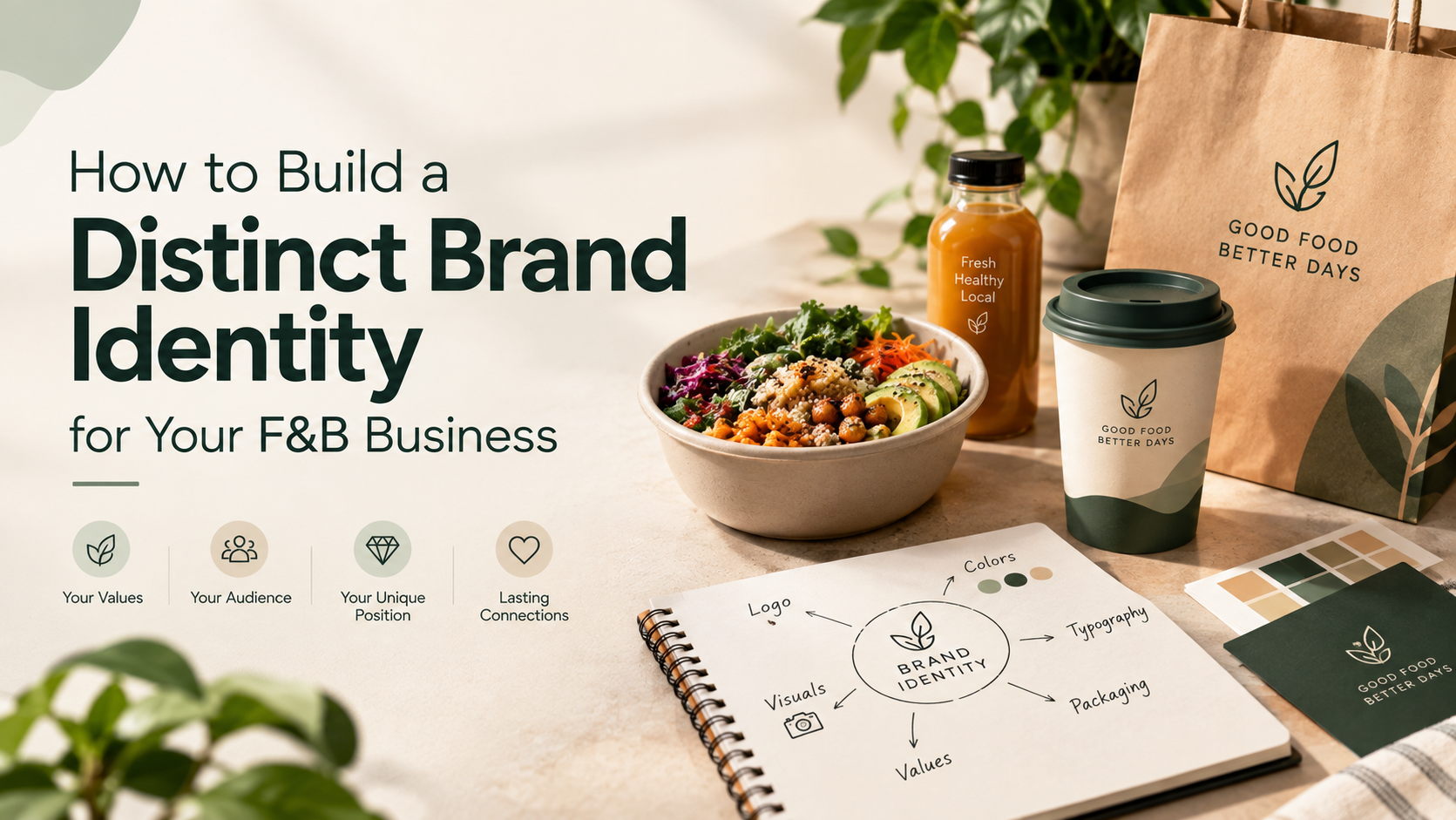
Color, typography, packaging, and interior design all send signals about price point and experience before a customer reads a single word of a menu. A budget-friendly quick-service concept and a premium dining experience need visibly different visual languages, and mismatched signals, premium design with budget pricing, or vice versa, create confusion that quietly costs conversions.
See our note on[ building brand identity](https://aaythamconsulting.com/building-brand-identity-crafting-your-unique-presence/) for a deeper walkthrough of this process.
Consistency Across Every Touchpoint
A distinct brand identity has to survive contact with delivery apps, social media, packaging, and in-person visits without losing coherence. Many F&B brands look sharp on Instagram but arrive in inconsistent packaging, or have a polished website that does not match the in-store experience at all. Auditing every touchpoint against the same brand guidelines closes these gaps.
Naming and Menu Language as Brand Assets
Dish names, menu descriptions, and even staff scripts are brand assets as much as a logo is. A distinct voice in how a menu is written, playful, elevated, homestyle, whatever fits the concept, reinforces the same identity a customer sees visually, and is often cheaper to get right than a full design overhaul.
Explore our[ craft](https://aaythamconsulting.com/craft) and[ journey](https://aaythamconsulting.com/journey) pages for more on how we build brand identity work for F&B clients, or reach out via[ contact](https://aaythamconsulting.com/contact).
Making the Brand Work Across a Growing Business
Brand identity that works for a single outlet often gets stretched thin the moment a business adds a second location, a delivery-only dark kitchen, or a retail packaged product line. Each new format tests whether the brand's core identity was ever specific enough to travel, or whether it only ever worked because one founder was physically present to hold the standard. Businesses that document their brand identity properly, tone of voice, visual system, plating and packaging standards, non-negotiable experience elements, give every new outlet, hire, or channel a clear reference point instead of relying on institutional memory that walks out the door when a key team member leaves. This documentation does not need to be elaborate to be useful; a concise brand guide that a new store manager or kitchen lead can actually read and apply is worth far more than an exhaustive one nobody opens. The businesses that scale their identity successfully tend to treat brand guidelines the same way they treat recipes: written down, tested, and revisited as the business learns what actually works in the field.
Conclusion
A distinct F&B brand identity comes from a genuine point of difference, visual signals that match the actual price and experience, and consistency across every touchpoint a customer encounters. Brands that get this right stand out immediately in a crowded category, while brands that skip it blend into the same visual noise as everyone else.
This is exactly the gap[ Aaytham Consulting](https://aaythamconsulting.com/) exists to close. Our brand positioning and marketing practice takes a founder's instinct about what their business should feel like and turns it into a documented, repeatable brand system: one that a new hire, a new outlet, or a new channel can pick up and execute consistently, without needing the founder in the room.
We do not treat branding as a standalone design exercise. Because our work sits alongside strategic planning and operations and broader business consulting, we build brand identity work that is actually deliverable by the team and systems a business has today, not a beautiful brand book that quietly falls apart the moment it meets real-world constraints. See our[ craft](https://aaythamconsulting.com/craft) page for how we structure this work, our[ impact](https://aaythamconsulting.com/impact) page for the results it has produced for clients, and our[ journey](https://aaythamconsulting.com/journey) page to understand how we approach a new engagement from the very first conversation.
If your F&B brand's identity has started to feel disconnected from where you actually want the business to go, that is precisely the gap we help close.[ Get in touch](https://aaythamconsulting.com/contact) to talk through where your brand stands today and what a properly aligned brand identity could look like for your business.