How to Post Clinical Photos & Videos Without Violating NMC Rules
The guidelines do not impose a blanket ban on clinical images. However, how these images are used and whether patients can be identified matter.
What should doctors keep in mind?
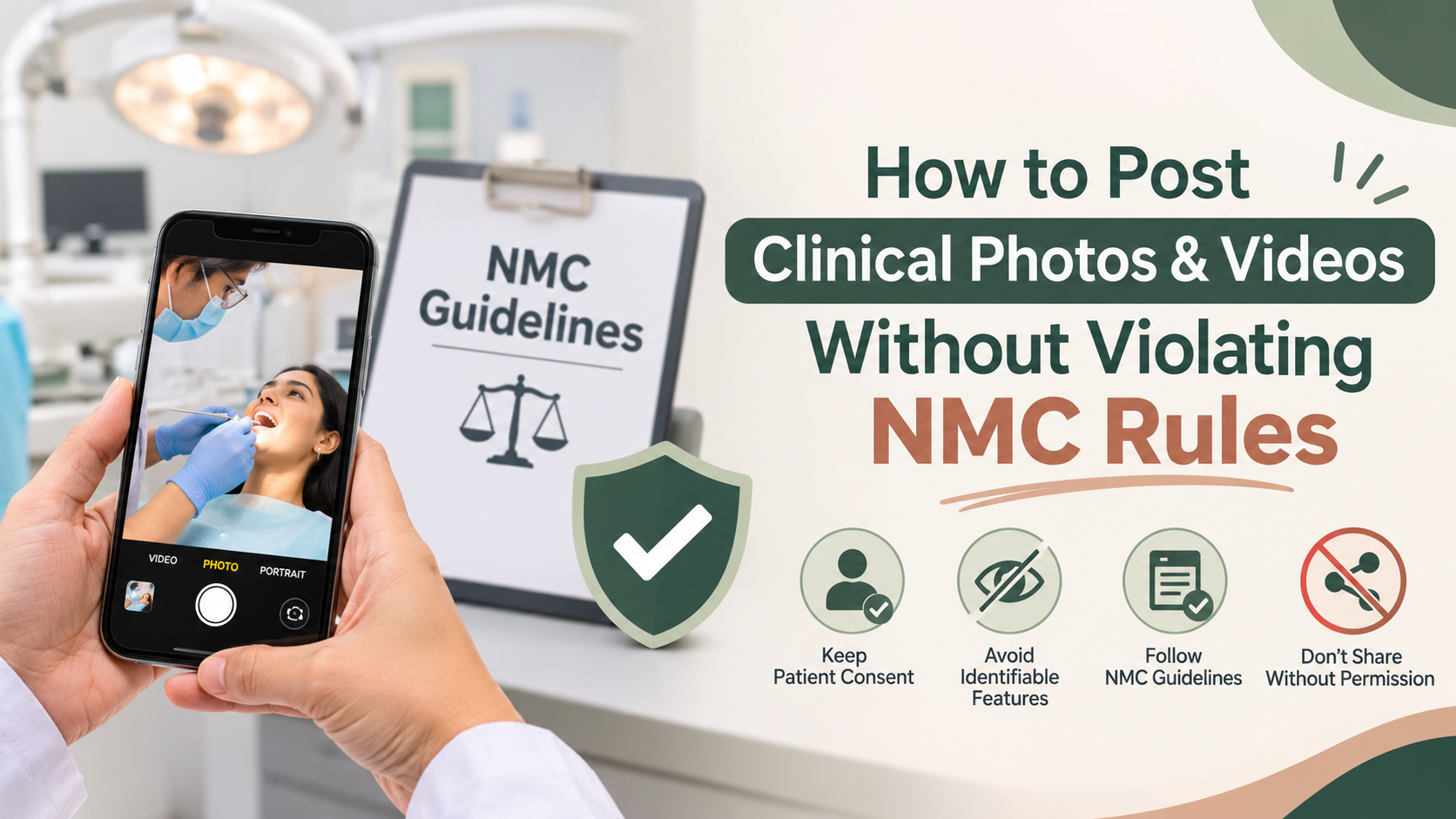
- Protect the patient's identity
Where sharing is legally permitted, doctors must take reasonable steps to prevent unnecessary disclosure of patient information.
Avoid: Posting an intraoral photograph along with the patient's name, face or identifying details.
What can you do instead? Use appropriately anonymised clinical images, where their use is otherwise permitted, without revealing the patient's identity.
- Obtain appropriate patient consent
When consent is legally required, it must be specific, informed, voluntary and documented. However, consent alone does not make prohibited advertising permissible.
Avoid: Assuming a signed consent form allows you to use a patient's surgery video for clinic promotion.
What can you do instead? Explain the intended use, obtain legally required consent and ensure the content itself is permitted.
- Use clinical content for genuine educational purposes
Clinical photographs and videos should not be turned into promotional material that makes misleading claims about treatment outcomes.
Avoid: Posting a surgical video with the caption "Our advanced technique guarantees painless surgery."
What can you do instead? Explain the procedure, its clinical purpose and relevant risks using an educational illustration or other appropriately permitted material.
Remember, removing a patient's name or obtaining consent does not automatically make every clinical photograph or video suitable for advertising.