
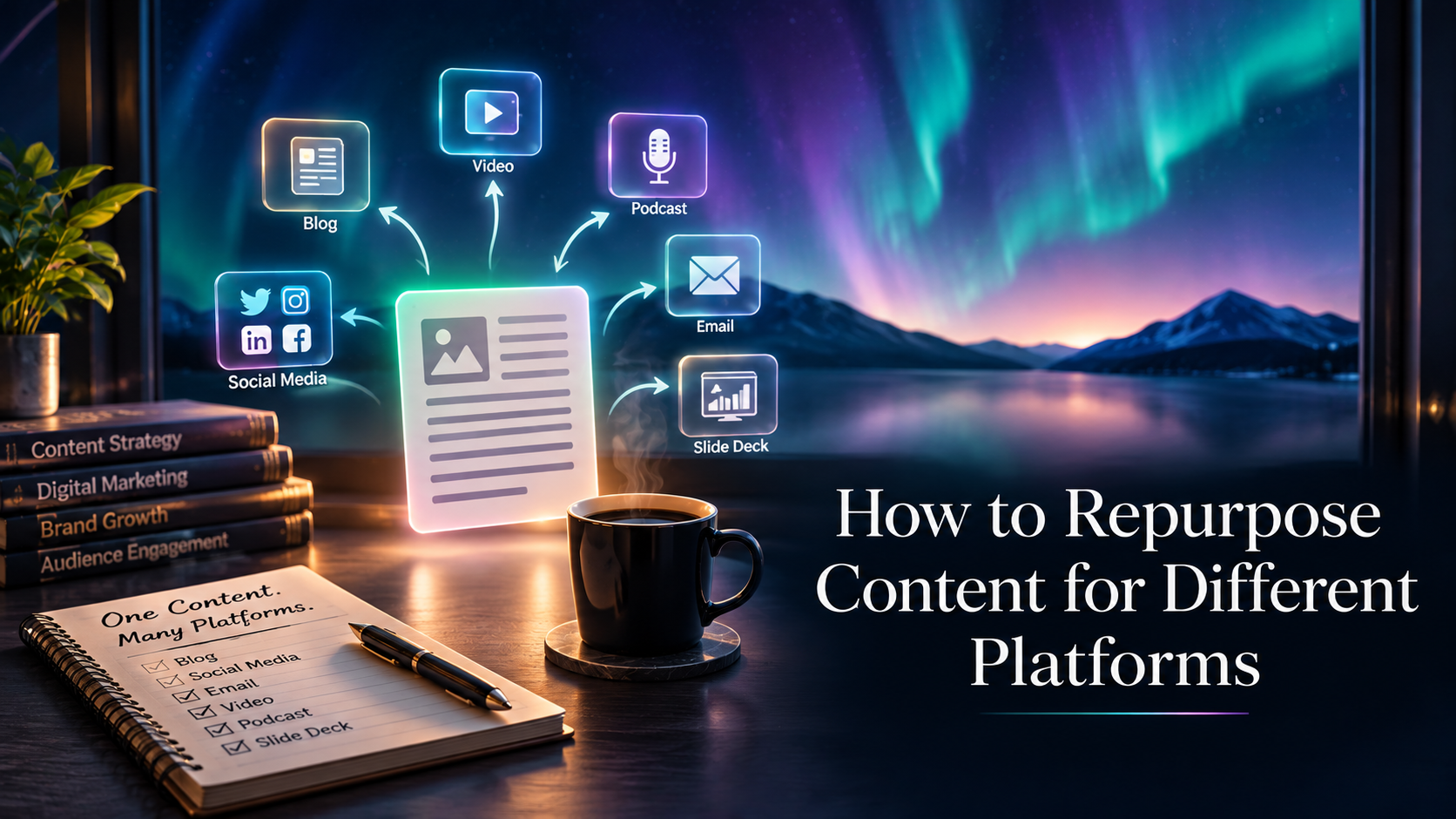
How to Repurpose Content for Different Platforms
1. Understanding Content Repurposing
Repurposing existing material involves changing its format to fit other platforms. This process is known as content repurposing. A thorough blog piece, for example, can be transformed into an infographic, a podcast episode, or even a series of social network updates. The secret is to keep the basic point of the content while modifying it to meet the particular needs and standards of each platform.
Repurposing material is a tactical move that improves content uniformity across platforms while also saving time. It enables you to consistently produce content without having to start from zero, target various audience segments, and reinforce your message.
2. Benefits of Repurposing Content
Repurposing material has several advantages that might have a big impact on your content strategy:
- Enhanced Reach: You can reach a larger audience by repurposing content for other channels. Not everyone uses content in the same manner; some could be more active on social media or in videos, while others might prefer to read blog pieces.
- Enhanced SEO: Your search engine optimization (SEO) efforts can be enhanced by repurposing material. For example, converting a blog post into a SlideShare presentation or a YouTube video increases the number of ways people can find your material.
- Enhanced Content Longevity: Repurposing your content makes it last longer. You may create new material that feels relevant to your audience and feels fresh out of a blog article that was published months ago.
- Time and Resource Efficiency: It takes time and effort to create material that is of a high caliber. Repurposing lets you make the most of your investment by making various uses of already-existing information.
3. How to Develop a Content Strategy for Repurposing
It's critical to have a content strategy that complements your overarching marketing objectives in order to repurpose content successfully. Here's how to accomplish it:
a. Examine Your Current Content
To begin with, carry out a content audit to find high-performing, timeless content that can be repurposed. Search for articles, podcasts, videos, and other types of content that significantly increased shares, conversions, or interaction. These are perfect candidates for being repurposed.
b. Identify Your Target Platforms
Choose the platforms you want to focus on next. The audiences on various platforms vary, thus you need adjust your material accordingly. As an illustration:
- Blog Posts: Perfect for thought leadership, guidance, and in-depth essays.
- Social Media: Excellent for quotations, infographics, pictures, and bite-sized material.
- YouTube: Excellent for tutorials, demonstrations, and video content.
- Podcasts: Good for audio content, conversations, and interviews.
- Email Newsletters: A useful tool for sending out summaries, exclusive content, and customized communications.
c. Adapt Content to Each Platform
It's time to modify your content after determining which platforms are your target audience. While repurposing content for other platforms, take into account these factors:
- Length: Compared to blog entries or films, social media posts are succinct and shorter. Adjust the duration of your material to meet the demands of the platform.
- Format: Convert your content to the platform-specific format. For instance, transform a podcast episode into an infographic or a blog piece into a screenplay for a movie.
- Tone and Style: The tones and styles of each platform vary. Social media material is frequently more conversational and engaging than blog postings, which could be more formal and thorough.
- Images: For social media sites like YouTube, Pinterest, and Instagram, visual content is essential. Make sure the eye-catching images in your recycled material speak to your readers.
d. Establish a Calendar of Content
To keep your reused content organized, you need a content calendar. Schedule the publication of each reused piece of material. By doing this, you can make sure that your material is consistent and that it is seen by your audience at the appropriate moment.
4. Repurposing Content: Practical Examples
Now let's look at some real-world instances of content repurposing for various platforms:
a. Blog Posts to Posts on Social Media
It is possible to turn one blog post into several social media posts. If your blog article is named "10 Tips for Effective Content Creation," for example, you could make a series of social media posts that each feature a different advice from the blog. To boost interaction, include a pertinent image or graphic with every post.
b. Webinar to Blog Post and Video Clips
There are various uses for webinars that you might do after hosting them. First, write up the webinar's transcription as an in-depth blog post. Next, take the most important parts of the webinar and turn them into quick videos for social media. By acting as teasers, these snippets can entice viewers to watch the entire webinar.
c. Podcast to Blog Post and Infographic
A wealth of content that can be transformed into many formats can be found in podcasts. Write a podcast transcription and utilize it as the foundation for a blog post. You may also take the most important information and findings from the podcast and use them to create an infographic that you can post on social media.
d. From E-books to Various Blog Posts
If you've written an e-book, you might want to divide it up into several blog entries. You may turn every chapter or section of the e-book into a stand-alone blog post that promotes the e-book and gives your audience useful content.
e. Case Study to Social Media and Video Carousel
Case studies are effective instruments for showcasing your achievements. Repurpose a case study by making a brief film that focuses on the main findings and implications. To make it easier for your audience to read and share the case study, you should also make a social media carousel that divides it into manageable chunks.
5. Tools for Repurposing Content
To streamline the process of repurposing content, consider using the following tools:
- Canva: A graphic design tool that allows you to create visuals, infographics, and social media posts.
- Lumen5: A video creation tool that transforms blog posts into engaging videos.
- Hootsuite: A social media management tool that helps you schedule and distribute repurposed content across multiple platforms.
- Anchor: A podcasting tool that makes it easy to create and distribute podcasts, which can then be repurposed into other content formats.
- Grammarly: A writing assistant that helps you refine and adapt your content for different platforms.
6. Measuring the Success of Repurposed Content
It's essential to track the performance of your repurposed content to understand its impact and refine your content strategy. Here are some key metrics to monitor:
- Engagement: Track likes, shares, comments, and other forms of engagement across different platforms. This will give you insights into how well your content resonates with your audience.
- Traffic: Monitor the traffic generated by your repurposed content, particularly if it drives users back to your website or blog.
- Conversions: Track conversions, such as sign-ups, downloads, or purchases, that result from your repurposed content. This will help you measure the ROI of your content efforts.
- SEO Performance: Analyze how repurposed content impacts your search engine rankings. Look for improvements in keyword rankings, organic traffic, and backlinks.
7. Best Practices for Effective Content Repurposing
To maximize the benefits of content repurposing, follow these best practices:
- Maintain Consistency: Ensure that your brand voice, tone, and messaging remain consistent across all repurposed content.
- Focus on Quality: While repurposing content saves time, it shouldn't compromise quality. Always prioritize creating high-quality content that adds value to your audience.
- Be Platform-Specific: Tailor your content to the unique characteristics of each platform. What works on one platform may not work on another, so adapt your content accordingly.
- Engage with Your Audience: Encourage interaction with your repurposed content by asking questions, inviting comments, and responding to your audience's feedback.
- Repurpose Evergreen Content: Focus on repurposing evergreen content that remains relevant over time. This ensures that your repurposed content continues to provide value long after its initial publication.
8. Conclusion
Repurposing content is a powerful strategy that allows you to maximize the value of your existing content, reach a wider audience, and maintain a consistent presence across different platforms. By developing a thoughtful content strategy, leveraging the right tools, and following best practices, you can create engaging and impactful content that resonates with your audience.
Remember, effective content creation isn't about constantly producing new content; it's about making the most of what you already have. By repurposing content, you can achieve your marketing goals more efficiently while providing your audience with valuable and diverse content experiences.