
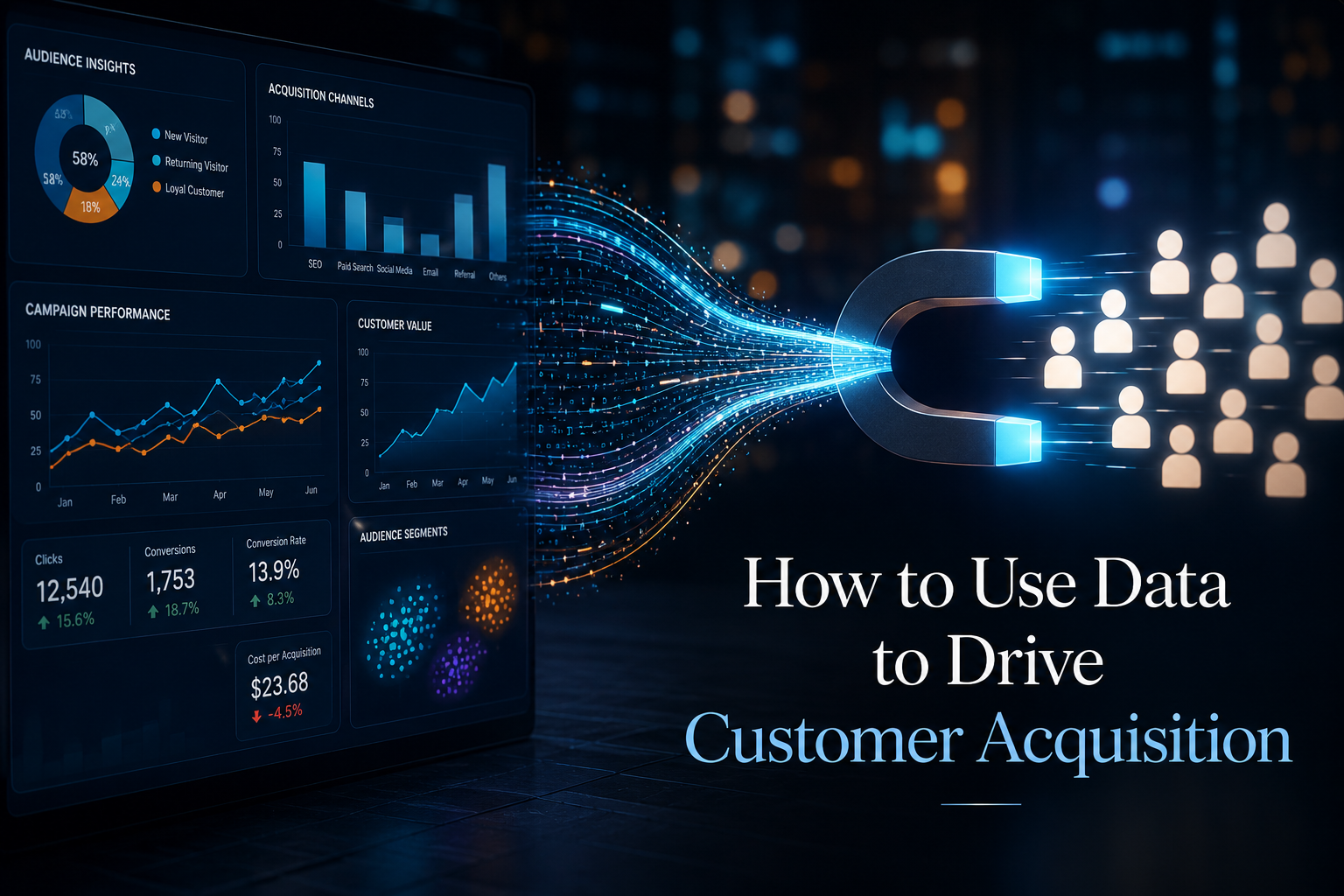
How to Use Data to Drive Customer Acquisition
Businesses have access to more data than ever before in the current digital era. When properly evaluated and used, this data can be a potent instrument for promoting client acquisition. Knowing how to use data may greatly improve your marketing strategy and help you draw in new clients, regardless of how big or little your business is. We'll go over how to leverage data to drive customer acquisition step-by-step in this blog post.
Understanding Customer Acquisition
Understanding what customer acquisition entails is crucial before delving into the data component. The process of acquiring new clients for your company is known as customer acquisition. This entails a number of methods and techniques meant to draw in prospective clients and win their loyalty. The final objective is to expand your clientele and boost sales.
The Role of Data in Customer Acquisition
Data is essential to client acquisition since it offers insights into the demographics, tastes, and behavior of customers. Businesses can develop audience-resonant tailored marketing efforts by evaluating this data. You can improve your client acquisition efforts by using data in the following ways:
1. Identify Your Target Audience
Finding your target group is the first step in leveraging data to acquire new customers. You can better target your marketing efforts to draw in your ideal clients if you know who they are. Here's how to define your target audience using data:
- Examine Current Clients: Examine your present clientele. What are their location, income level, age, and gender? What characteristics or interests do they have in common? You can develop a consumer profile with the aid of this analysis.
- Surveys: To learn more about your clients, think about distributing surveys. Inquire about their buying patterns, pain points, and preferences. This candid criticism can yield insightful information.
- Make Use of Social Media Analytics: If you are active on social media, make use of the analytics features offered by sites such as Facebook, Instagram, and Twitter. You can better understand your audience by using these tools to see who is interacting with your content.
2. Leverage Web Analytics
Using web analytics to monitor user behavior on your website is the next step after you have a firm grasp of your target demographic. You can learn a lot about how users interact with your website from tools like Google Analytics. What to look for is as follows:
- Traffic Sources: Determine the sources of traffic to your website. Do people find you via social media, referral links, or search engines? You can more efficiently distribute your marketing spend if you are aware of the sources of your visitors.
- User Behavior: Examine user behavior to see how people utilize your website. What are the most frequently visited pages? Where are they dropped off? You may use this information to optimize your website for increased conversion rates and a better user experience.
- Conversion Rates: Monitor the proportion of site visitors who complete a desired action, such buying something or subscribing to a newsletter. You can pinpoint regions in your customer acquisition funnel that need work by knowing your conversion rates.
3. Segment Your Audience
Treating every consumer as though they are all the same can result in lost chances. You can design more individualized marketing efforts by using data to categorize your audience according to different parameters. Here's how to successfully divide up your audience:
- Demographic Segmentation: Segmenting your audience according to demographics like age, gender, income, and educational attainment is known as demographic segmentation. This enables you to target particular groups with your messaging.
- Behavioral Segmentation: Examine consumer behavior, including past purchases and levels of engagement. This aids in determining which clients are more likely to become clients and which might require additional support.
- Geographic Segmentation: If your company has several locations, think about breaking up your audience into several geographic groups. Adapting your marketing strategies to certain geographic areas can improve relevance and effectiveness.
4. Create Targeted Marketing Campaigns
You may now develop targeted marketing efforts as you have a thorough understanding of your audience and its demographics. Data-driven marketing entails creating offers and messaging that appeal to particular clientele. Here are a few tactics to think about:
- Customized Email Campaigns: Send customized emails by using client information. Refer to clients by name, provide product recommendations based on their prior purchases, and provide special discounts. The open and click-through rates of personalized emails are greater.
- Social Media Advertising: Make targeted advertisements on social media sites by using data. Facebook, for instance, lets you personalize advertisements according to user demographics, interests, and activity. This guarantees that the correct people see your advertisements.
- Content Marketing: Produce material that speaks to your target audience's interests and demands. To find out what subjects they are interested in, use data. Podcasts, films, infographics, and blog entries may fall under this category.
5. Optimize Your Sales Funnel
The path prospective buyers travel from learning about your brand to buying from you is known as your sales funnel. You may improve customer acquisition by optimizing this funnel with the aid of data. Here's how:
- Find Bottlenecks: Utilize analytics to pinpoint the places in your sales funnel where prospective clients leave. This can be the result of a convoluted checkout procedure, unclear calls to action, or a perplexing website layout.
- A/B Testing: To compare various iterations of your website, email campaigns, or advertisements, use A/B testing. This enables you to make data-driven decisions and identify which variations perform better.
- Simplify Your Process: Cut down on the processes needed to execute a purchase to streamline your sales funnel. Make it simple for clients to locate what they need and complete the checkout process.
6. Measure and Refine
Continuously measuring and improving your efforts is the last phase in leveraging data to promote customer acquisition. To assess the effectiveness of your marketing activities, establish specific objectives and monitor key performance indicators (KPIs). What to measure is as follows:
- Conversion Rates: Monitor the proportion of site visitors who complete a desired action, such buying something or subscribing to a newsletter.
- Customer Acquisition Cost (CAC): Determine the cost of obtaining a new client by using the Customer Acquisition Cost (CAC) method. This is the ratio of marketing and sales costs to the number of new clients attracted.
- Client Lifetime Value (CLV): Calculate how much a client contributes to your company overall over the course of their lifetime. This aids in your comprehension of the long-term effects of your efforts to acquire new customers.
By regularly measuring and refining your customer acquisition strategies, you can optimize your marketing efforts and drive more revenue for your business.
Conclusion
Data is a potent instrument for promoting client acquisition. You may build your business and draw in new clients by knowing who your target audience is, using web analytics to segment your audience, developing focused marketing campaigns, streamlining your sales funnel, and tracking and improving your progress. To get the best results, maintain your marketing tactics customer-centric and data-driven.