
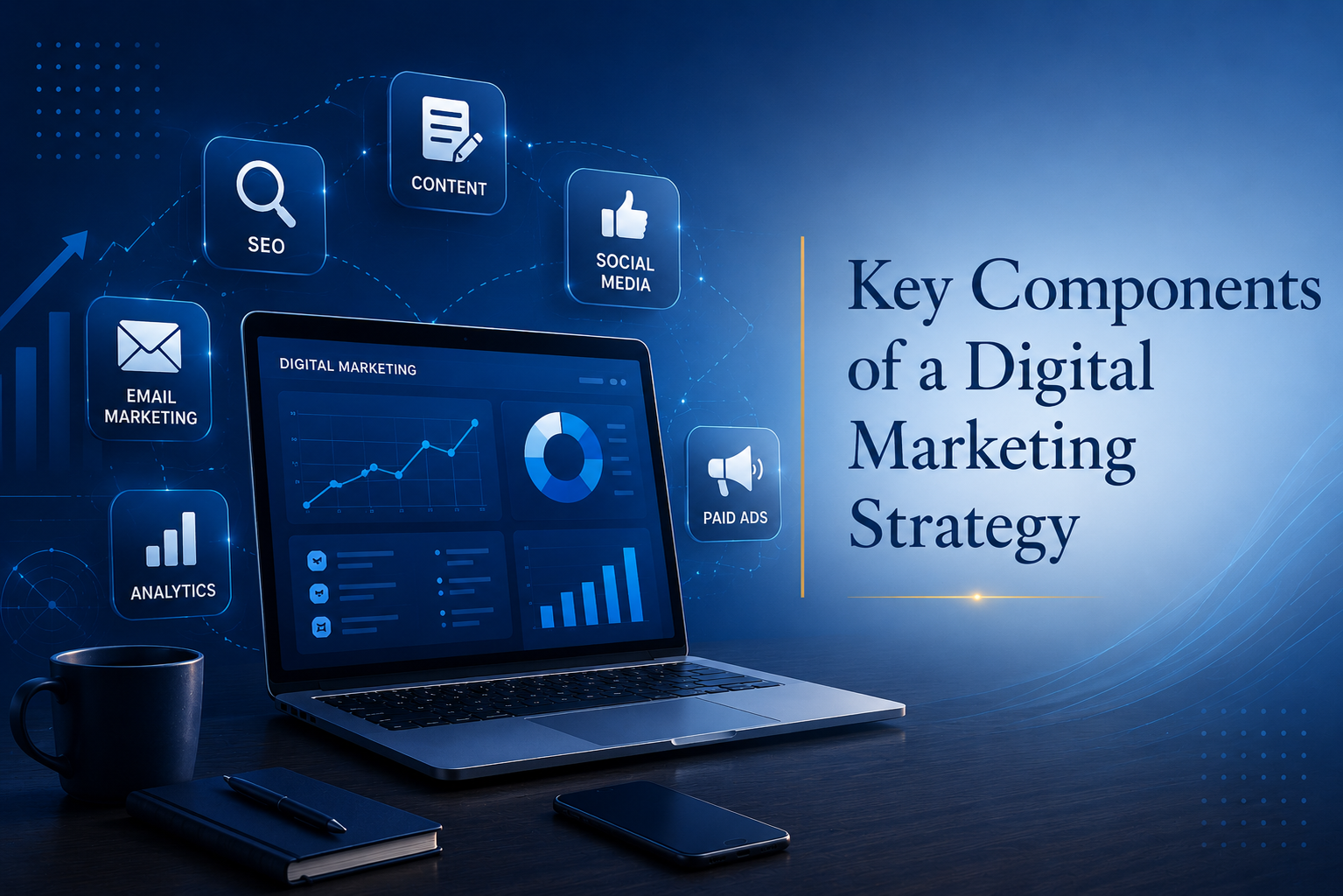
Key Components of a Digital Marketing Strategy
In the digital age, companies looking to make a name for themselves in a crowded market need to have a strong digital marketing strategy. But what exactly makes a digital marketing strategy effective? This blog explores the key components of a successful digital marketing strategy, including developing a comprehensive plan, executing effective campaigns, leveraging paid advertising, and using content marketing to achieve sustainable business growth.
What is Digital Marketing?
Any marketing initiative that uses electronic devices or the internet to connect with customers is referred to as digital marketing. It includes a broad range of activities designed to engage audiences through digital platforms.
Some of the most common digital marketing channels include:
- Websites.
- Search engines.
- Email marketing.
- Social media.
- Online advertising.
- Content marketing.
Unlike traditional marketing, digital marketing enables businesses to communicate with their audiences more directly and measure campaign performance using real-time data.
There is no one-size-fits-all approach to digital marketing. Businesses can combine different strategies and channels based on their goals, target audience, industry, and available resources.
Developing a Comprehensive Digital Marketing Plan
A comprehensive digital marketing plan provides the foundation for your overall strategy. It defines your target audience, business objectives, marketing channels, budget, and methods for measuring performance.
Here are the key steps to developing an effective digital marketing plan:
1. Market Research and Analysis
Comprehensive market research is the first step in developing a successful digital marketing strategy. Understanding the needs, preferences, behaviors, and challenges of your target audience allows you to create more relevant campaigns.
Use tools such as surveys, social media insights, website analytics, and customer feedback to gather information about your audience.
Market research should also include an analysis of competitors, industry trends, and changes in customer behavior.
2. Setting Clear Objectives
Clearly define what you want your digital marketing efforts to accomplish.
Your goals may include:
- Increasing brand awareness.
- Generating qualified leads.
- Increasing website traffic.
- Improving customer engagement.
- Increasing sales.
- Improving customer retention.
Make sure your objectives follow the SMART framework: Specific, Measurable, Achievable, Relevant, and Time-bound.
3. Competitive Analysis
Analyzing your competitors can provide valuable insights into their digital marketing strategies and help identify opportunities for differentiation.
Review their:
- SEO strategies.
- Content marketing.
- Social media presence.
- Advertising campaigns.
- Website experience.
- Customer engagement.
Use these insights to strengthen your own strategy and identify areas where your business can stand out.
4. Budget Allocation
Determine how much you are prepared to invest in digital marketing and distribute your budget across the channels that are most likely to support your objectives.
Your budget may cover:
- Paid advertising.
- Content creation.
- SEO.
- Social media marketing.
- Email marketing.
- Marketing technology.
- Analytics and reporting.
Regularly review your spending and performance to ensure your resources are being allocated effectively.
5. Measuring Performance
Establish key performance indicators (KPIs) to evaluate the success of your digital marketing activities.
Common KPIs include:
- Website traffic.
- Conversion rates.
- Lead generation.
- Customer acquisition cost.
- Social media engagement.
- Email open rates.
- Return on investment (ROI).
Regular performance measurement allows businesses to identify what is working and make informed adjustments.
Executing Effective Digital Marketing Campaigns
Once your digital marketing plan is established, the next step is to execute campaigns designed to achieve specific objectives.
1. Personalized Marketing
Personalization can help businesses create more relevant experiences for their audiences.
Use customer and audience data to develop campaigns based on factors such as:
- Location.
- Interests.
- Previous interactions.
- Purchasing behavior.
- Demographics.
Personalized marketing can make communications more relevant and improve engagement and conversion opportunities.
2. Social Media Marketing
Social media provides businesses with opportunities to build awareness, engage customers, distribute content, and generate leads.
Each platform has different audiences and strengths. For example, LinkedIn can be effective for B2B communication, while Instagram and TikTok are particularly useful for visual and short-form content.
Create platform-specific content, engage consistently with your audience, and use analytics to measure performance.
3. Email Marketing
Email marketing remains an effective way to build and maintain relationships with customers and prospects.
Businesses can use email campaigns to:
- Share educational content.
- Promote products and services.
- Deliver personalized offers.
- Nurture leads.
- Retain existing customers.
Segment your email lists and use automation where appropriate to deliver relevant messages at the right time.
4. SEO and SEM
Search engine optimization (SEO) and search engine marketing (SEM) are important components of a comprehensive digital marketing strategy.
SEO focuses on improving your website's visibility in organic search results. Key activities include:
- Keyword research.
- On-page optimization.
- Technical SEO.
- Content creation.
- Internal linking.
- Building authoritative content.
SEM, including paid search advertising, can provide additional visibility and help businesses reach customers actively searching for relevant products or services.
Combining SEO and SEM can create a balanced approach to search visibility.
Paid Advertising in Digital Marketing
Paid advertising involves investing in digital ad placements to promote your company, products, or services.
Several forms of paid advertising can be included in a digital marketing strategy.
1. PPC (Pay-Per-Click) Advertising
PPC advertising allows businesses to bid on relevant keywords and pay when users click on their advertisements.
To improve PPC performance:
- Choose relevant keywords.
- Create compelling ad copy.
- Use appropriate audience targeting.
- Optimize landing pages.
- Monitor conversion data.
- Test different advertisements.
Effective PPC campaigns can generate targeted traffic and support lead generation and sales.
2. Social Media Advertising
Platforms such as Facebook, Instagram, LinkedIn, and other social networks offer various advertising formats designed for different marketing objectives.
These can include:
- Sponsored posts.
- Video advertisements.
- Carousel advertisements.
- Lead-generation advertisements.
- Story advertisements.
Use audience targeting and campaign data to reach the segments most relevant to your business.
3. Display Advertising
Display ads are visual advertisements that appear across websites, apps, and other digital properties.
They can include:
- Banner advertisements.
- Image advertisements.
- Video advertisements.
- Interactive advertisements.
Display advertising can be useful for increasing brand awareness and driving traffic to your website.
4. Retargeting Advertisements
Retargeting involves showing advertisements to users who have previously interacted with your website or digital channels but have not completed a desired action.
For example, a business can retarget visitors who viewed a product page but did not make a purchase.
Retargeting can help keep your brand visible and encourage potential customers to return and complete a conversion.
Content Marketing in Digital Marketing
Content marketing focuses on creating and distributing valuable, relevant, and consistent content to attract and retain a clearly defined audience.
Content can take many forms, including:
- Blog articles.
- Videos.
- Infographics.
- Podcasts.
- eBooks.
- Whitepapers.
- Webinars.
- Case studies.
Content marketing supports several important digital marketing objectives.
1. Building Brand Authority
High-quality content can establish your business as a knowledgeable and credible source within your industry.
Share useful insights, practical advice, research, and thought leadership to demonstrate your expertise and build trust with your audience.
2. Driving Website Traffic
Useful and engaging content can attract visitors to your website through search engines, social media, email, and other digital channels.
Publishing content consistently can encourage users to return to your website and explore additional resources.
3. Generating Leads
Content marketing can also support lead generation by offering valuable resources in exchange for contact information.
Examples include:
- eBooks.
- Whitepapers.
- Webinars.
- Guides.
- Templates.
- Reports.
These resources can help businesses capture leads and nurture them through the customer journey.
4. Supporting Search Engine Optimization
High-quality content plays an important role in SEO.
Businesses can improve their search visibility by creating useful content around relevant topics and keywords while optimizing elements such as:
- Page titles.
- Headings.
- Meta descriptions.
- Internal links.
- Image alt text.
Content marketing and SEO work together to attract relevant organic traffic and strengthen a website's overall search presence.
Conclusion
A successful digital marketing strategy requires more than simply being present online. Businesses need a comprehensive plan that connects market research, clear objectives, competitive analysis, budget allocation, campaign execution, content marketing, paid advertising, and performance measurement.
By understanding your target audience and choosing the right combination of digital channels, you can create campaigns that are more relevant, measurable, and effective.
Digital marketing is also an ongoing process. Regularly analyzing performance, testing new approaches, and adapting to changes in customer behavior and technology will help your business maintain a strong online presence and achieve sustainable growth.