Robots Can Now Help Dentists Place Implants in Difficult Areas of the Jaw
Placing dental implants can be challenging when patients have severe bone loss in the upper jaw. In some cases, conventional implant placement may not be possible without additional procedures.
How Could This Help Implant Dentists?
- Support Implant Placement in Complex Cases
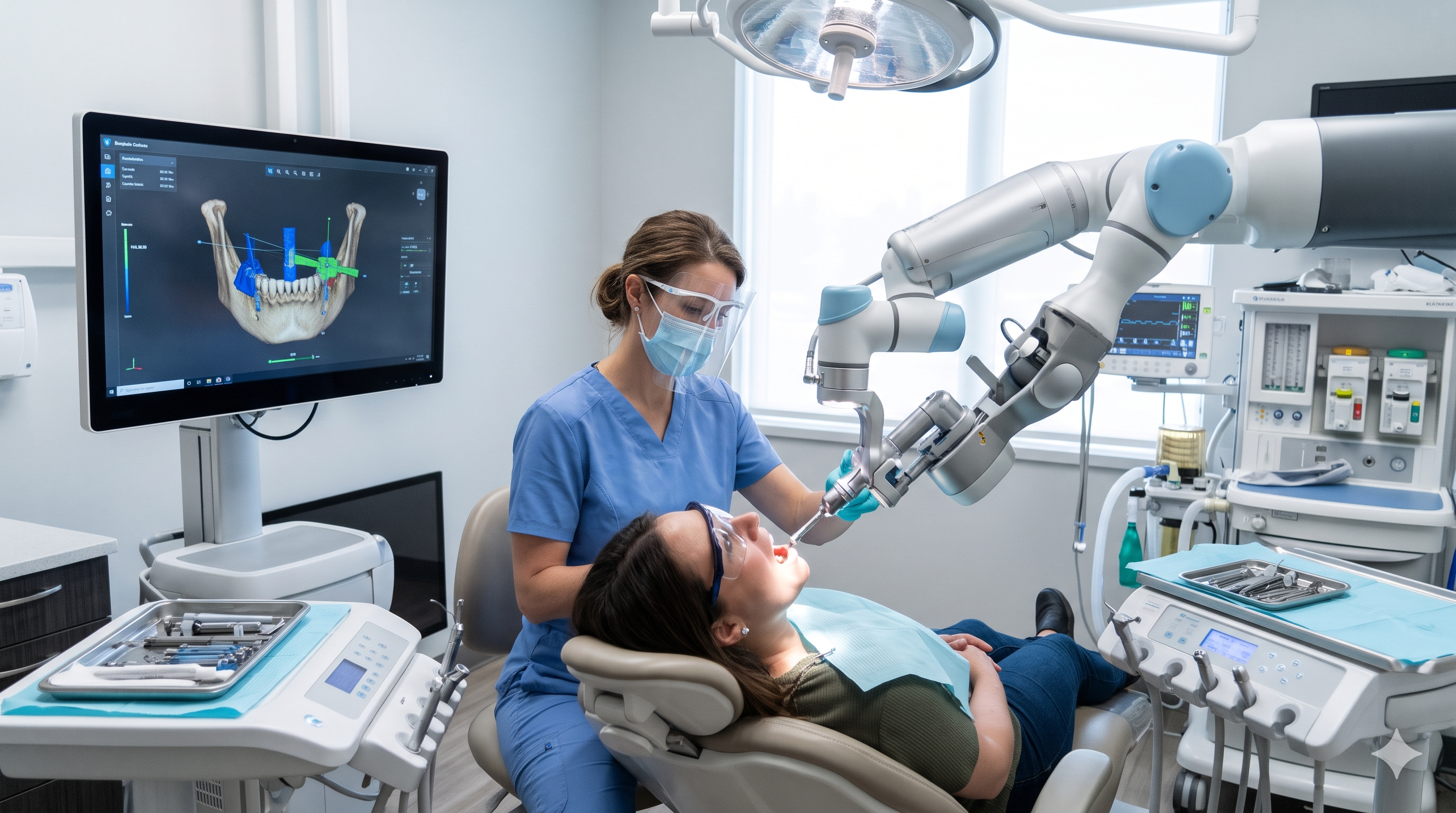
Pterygoid implants are placed in the posterior upper jaw, using deeper bone structures for support. Robotic assistance could help surgeons follow a planned implant position in this challenging area.
- Provide Guidance During Surgery
The system uses digital planning and robotic guidance to assist the surgeon during implant placement. This could help the dentist maintain the planned position and direction while drilling.
- Support More Precise Treatment Planning
Dentists can plan implant positions using 3D imaging before surgery. The robotic system helps translate this digital plan into the surgical procedure.
- Expand Treatment Options for Selected Patients
Pterygoid implants may offer an alternative for some patients with significant posterior upper-jaw bone loss. Robotic guidance could support appropriately trained surgeons performing these procedures.
What Does This Mean for Dental Clinics?
Robotic-assisted implant surgery is expanding into more complex procedures. For implant specialists, this development could provide additional support when treating selected patients with severe upper-jaw bone loss.
However, the technology does not replace surgical expertise, and its benefits depend on proper case selection and training.
#DentalImplants #RoboticDentistry #ImplantDentistry #DentalInnovation #GroDentCollective