
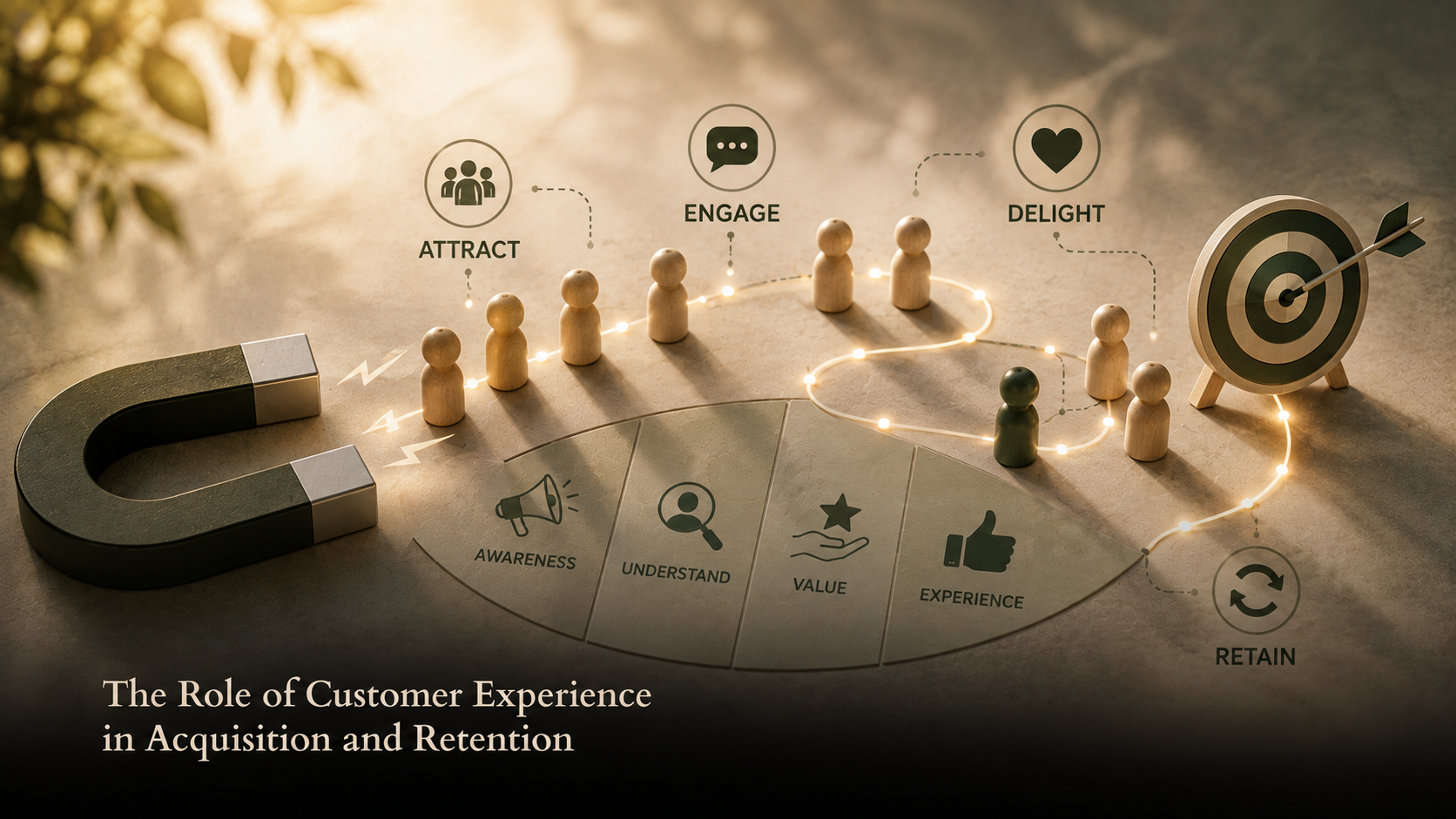
The Role of Customer Experience in Acquisition and Retention
Businesses are always looking for methods to draw in new clients while holding onto their current clientele in the fiercely competitive market of today. Customer experience (CX) is one of their most effective tactics. Both acquisition and retention rates can be strongly impacted by how consumers view and engage with a brand.
We will examine how important customer experience is in these two domains in this blog article, looking at tactics, industry best practices, and actual cases that show how great CX can propel company success.
Understanding Customer Experience
It's important to clarify what we mean by "customer experience" before getting into the finer points of client acquisition and retention. Every connection a customer has with a brand, from initial awareness and consideration to post-purchase support, is included in the customer experience.
It comprises elements like:
- User Experience (UX): The usability and design of digital platforms, such as websites and mobile apps.
- Customer Service: The standard of assistance given prior to, during, and following a purchase.
- Brand Perception: The opinion and sentiment that consumers have of a brand as a result of their interactions and experiences.
- Emotional Connections: The emotions and sentiments that result from a consumer's relationship with a brand.
Regardless of the caliber of the good or service provided, a bad customer experience can drive away customers, whilst a good one can boost customer satisfaction, loyalty, and advocacy.
The Connection Between Customer Experience, Acquisition, and Retention
Customer Acquisition
Acquisition is the process of bringing in new clients for your company. The importance of customer experience in acquisition is more than ever in a time when consumers have access to a multitude of options and a great deal of information.
The following are some ways that CX affects acquiring new customers:
1. Initial Impressions Are Important
A potential customer's whole connection with a brand might be shaped by their first encounter with it. Numerous elements, such as website design, usability, and customer service quality, might affect this initial impression.
Brands that put an emphasis on a smooth and joyful experience have a higher chance of turning prospects into paying customers.
For example, take the online shoe and clothes retailer Zappos, for instance. Zappos is well known for its outstanding customer support, which includes a 365-day return policy and free shipping. Because of their dedication to providing excellent customer service, Zappos has been able to stand out in a crowded market and draw in new clients who value how simple and convenient it is to buy there.
2. Word-of-Mouth Marketing
Word-of-mouth recommendations, a potent marketing tool, can result from satisfying consumer encounters. When consumers have positive experiences, they are more inclined to tell their friends and family about it, which helps the brand develop naturally.
Nielsen reports that referrals from friends and family are trusted by 92% of customers more than any other type of promotion.
Brands that prioritize providing outstanding customer experiences build a devoted following of customers who are eager to recommend them. Word-of-mouth advertising has the potential to be a major source of new clients.
3. Internet Reviews and Social Proof
Online reviews and social proof are important factors in influencing the decisions of potential customers in the digital era. Before making a purchase, consumers frequently use social media, Google, Yelp, and other platforms to assess other people's experiences.
A company that has a solid reputation for providing excellent customer service is more likely to draw in new clients.
For example, Airbnb's brand is based on the experiences of its customers. Positive evaluations have a big influence on prospective customers' booking selections, and guests frequently write in-depth reviews about their experiences. Knowing that great experiences will result in more reservations and higher conversion rates, Airbnb encourages hosts to deliver them.
4. Making a Difference in a Congested Market
Customer experience can be a crucial distinction in crowded businesses. Customers' experiences with a brand can influence their decision when goods and services are comparable. Businesses may differentiate themselves from the competition by investing in producing distinctive and memorable experiences.
Consider Apple. Despite the fact that numerous computer businesses provide comparable products, Apple has amassed a devoted following by prioritizing the user experience in both product design and shop layout.
With its friendly employees and interactive product displays, the Apple Store experience creates an atmosphere that draws in new clients and motivates them to buy.
Customer Retention
While gaining new clients is crucial, keeping current clients is just as, if not more, crucial. According to research, acquiring a new customer is five to twenty-five times more expensive than keeping an existing one.
The following are some ways that customer experience is crucial to retention:
1. Fostering Client Loyalty
Loyalty is increased by a satisfying consumer experience. Customers are more inclined to make repeat purchases from a brand when they feel valued and appreciated.
Customers develop strong emotional bonds with brands that put the customer experience first, which fosters enduring loyalty.
Starbucks is a shining example of a company that has used customer satisfaction to successfully cultivate brand loyalty. Customers can enjoy unique deals, individualized experiences, and a sense of community with the Starbucks Rewards program. Starbucks' customer retention rates have increased dramatically as a result of this reward program.
2. Lowering the Rate of Churn
Customer churn, which can be harmful to a firm, can result from a bad customer experience. Customer experience-focused brands are better able to recognize and resolve issues, which lowers the possibility that consumers may go to rivals.
Amazon has perfected the art of providing outstanding customer service to lower churn. Amazon has established a culture where customers feel appreciated and supported because of its quick shipping, personalized suggestions, and easy returns policy. Amazon's remarkable customer retention statistics can be attributed in part to this.
3. Promoting Client Advocacy
When consumers have great experiences, they spread the word about the company and become brand ambassadors. Increased revenue and the acquisition of new clients are possible outcomes of this organic marketing.
The eyewear company Warby Parker has a devoted following thanks to its dedication to providing excellent customer service. Customers frequently post favorable experiences on social media, and Warby Parker's home try-on program, free shipping, and outstanding customer service have built a devoted fanbase.
4. Recognizing and Resolving Issues
The customer experience gives a brand important information about where it can make improvements. Brands can enhance customer retention by creating a more smooth and enjoyable experience by paying attention to customer input and eliminating pain areas.
For example, Uber has improved its client experience significantly through iteration and feedback. Uber has decreased attrition and raised user happiness by tackling problems including surge pricing, ride cancellations, and customer service.
Strategies for Improving Customer Experience
The subject of how companies may enhance their customer experience (CX) persists despite the obvious significance of CX in acquisition and retention. Here are a few tactics to think about:
1. Create a Customer Journey Map
Finding problems and places for improvement requires an understanding of the client journey. Businesses can identify points of friction and develop solutions by mapping the client journey.
2. Make Training Investments
Employees are the first point of contact with customers. Putting money into staff development and training can enable them to deliver outstanding customer service, which will raise client satisfaction.
3. Make Use of Data and Technology
Data and technology can be effective instruments for improving the client experience. Businesses can develop individualized experiences by using data analytics to learn about the tastes and behavior of their customers.
4. Encourage a Customer-Centric Culture
Providing outstanding customer experiences requires a culture that is focused on the needs of the customer. Businesses may foster an environment where the customer experience is at the center of every decision by giving priority to the requirements and feedback of their customers.
5. Calculate and Monitor Customer Experience Indicators
Monitoring customer experience indicators like Customer Satisfaction (CSAT), Net Promoter Score (NPS), and Customer Effort Score (CES) can reveal areas that need improvement.
Conclusion
Both customer acquisition and retention are significantly impacted by the customer experience. Businesses may build a devoted clientele, promote organic growth, and boost income by putting a high priority on CX.
Businesses may remain ahead of the competition and prosper in the fast-paced market of today by realizing the value of the customer experience and putting plans in place to enhance it.
Renowned customer experience specialist Shep Hyken once said:
"Customer experience is not a department, it's a philosophy."
Businesses may foster a customer-centric culture and achieve long-term success and growth by embracing this attitude.
The Role of Customer Experience in Acquisition and Retention