What Are the New NMC Guidelines Talking About Social Media Promotion?
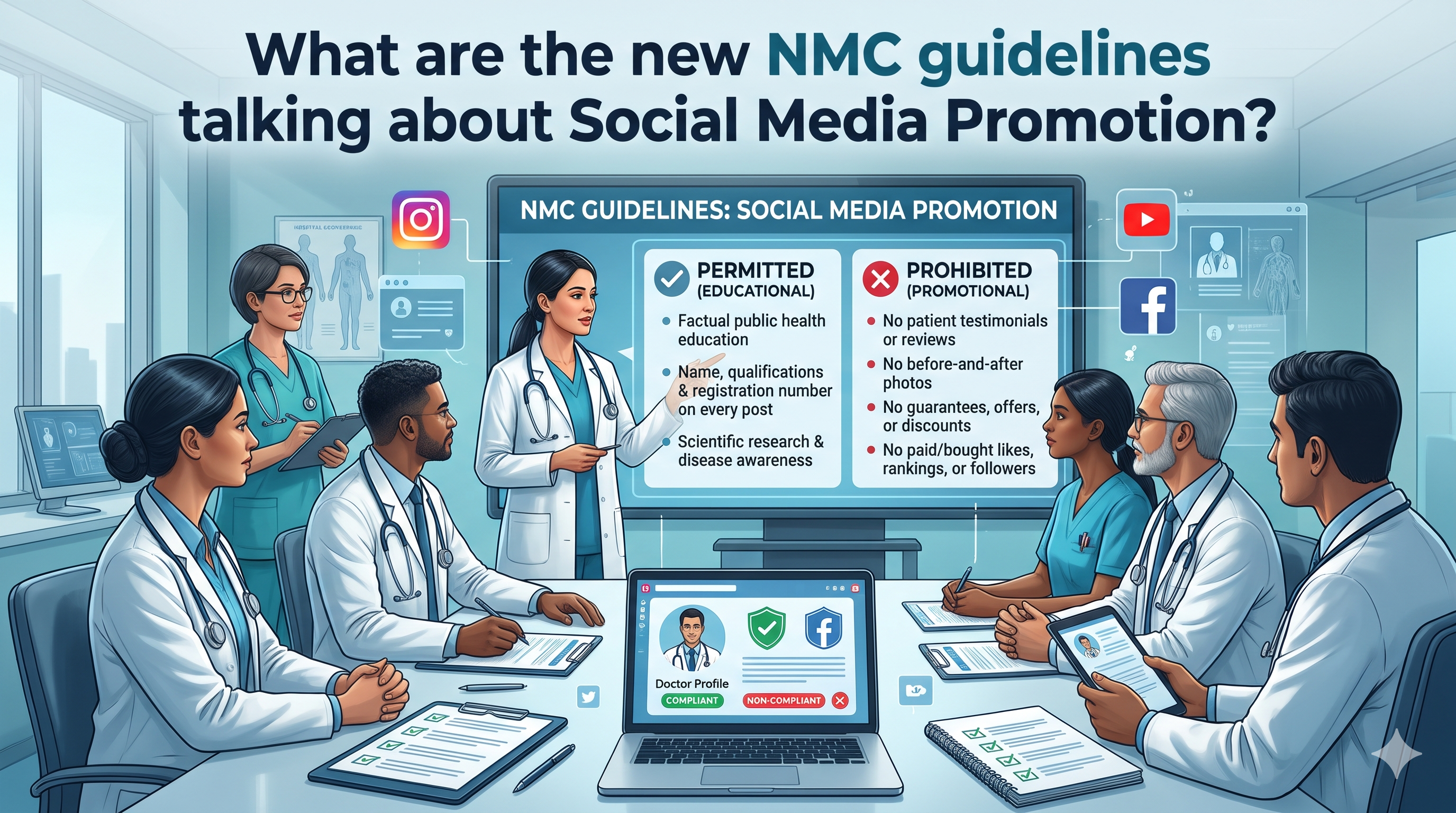
The guidelines do not completely ban social media communication. But they draw a clear line between sharing information and promoting medical services. Let us look into what are allowed.
1. Educational content is allowed
Doctors can share health awareness content and educate the public without promoting their services.
Example: A dentist explaining how frequently toothbrushes should be replaced.
Avoid: Turning the educational video into an advertisement offering a discounted cleaning package.
2. Factual clinic information can be shared
Medical institutions can share factual information about their location, contact details, facilities, services and charges.
Example: "Our clinic offers root canal treatment, dental implants and orthodontic consultations and our clinic is located in Chennai."
Avoid: "We offer the best root canal treatment in Chennai with guaranteed results."
3. Promotional claims are restricted
Doctors should avoid exaggerated treatment claims, guaranteed results and misleading comparisons.
Example: Explaining the steps involved in dental implant treatment.
Avoid: "Get permanent teeth in one day with 100% success."
4. Social media engagement should remain ethical
The guidelines restrict promotional testimonials, paid endorsements and artificial manipulation of followers, likes or reviews.
Example: Sharing an educational post about the importance of regular dental check-ups.
Avoid: Paying influencers to recommend your clinic or purchasing fake Google reviews.
What does this mean for clinic owners?
Social media can still be used to educate patients and share genuine information about healthcare services. The key is to inform patients, not influence them through misleading promotional claims.