How to Acquire and Retain Customers in the Food and Beverage Industry
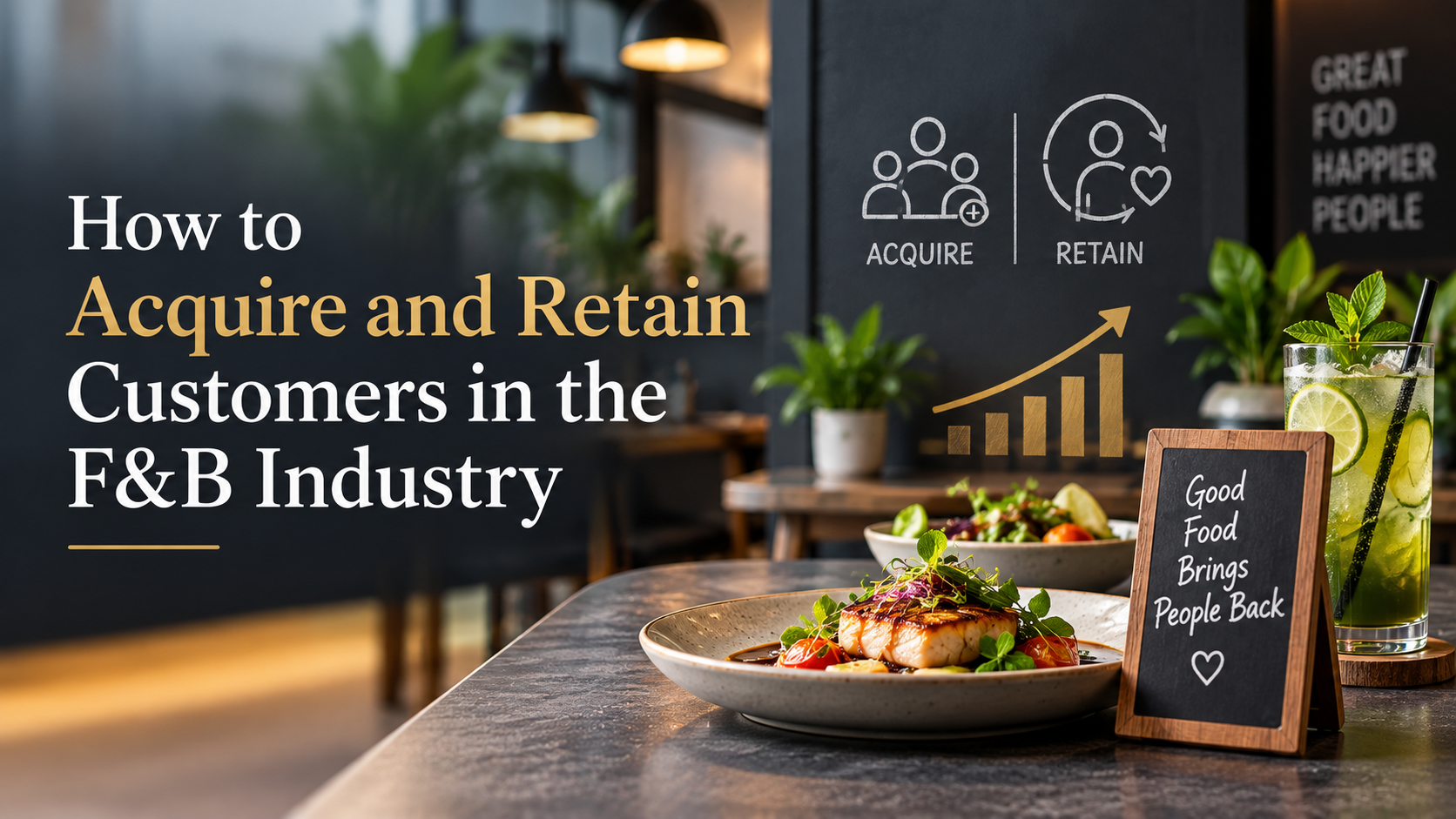
A restaurant, cafe, or food brand can spend heavily to get someone through the door once and still fail as a business, because the entire economics of food and beverage depend on that person coming back. Acquisition gets a diner to try you. Retention is what actually pays the rent. Most food and beverage businesses treat the two as the same problem and end up over-investing in the first while barely managing the second — exactly backwards for an industry with this much repeat-purchase potential.
What Acquisition Actually Means in Food and Beverage
Getting new customers rarely comes down to one channel. It's a combination of being visible where people are already looking maps and local search, delivery platforms, social discovery and converting that visibility into an actual visit or order, not just a like or a follow. The mistake most brands make is measuring the wrong end of this: impressions and reach look good on a report, but they say nothing about covers filled or orders placed.
- Local search and maps presence: for a dine-in or takeaway business, showing up accurately and attractively when someone searches nearby is often higher intent than any paid ad.
- Delivery platform visibility: for brands on Swiggy, Zomato, or similar, ranking and presentation on the platform functions as its own acquisition channel, with fees that need to be weighed against what the order is actually worth.
- Referral and word-of-mouth loops: a satisfied customer bringing a friend is often the cheapest, highest-converting acquisition channel available, yet it's the one least often deliberately designed for.
- Paid promotion tied to footfall, not reach: campaigns should be judged on actual covers or orders generated, not on cost per click or impressions served.
This is the discipline behind [what customer acquisition actually is and why it compounds](https://aaythamconsulting.com/blogs/what-is-customer-acquisition-and-why-is-it-important) where the channel matters less than whether spend is actually tied to paying, returning customers.
What this looks like when it's done right: one AyC client came in with a crowded category and a limited budget. The answer wasn't more spend, it was a tighter system Shopify, creatives, and Meta Ads working as one connected funnel, awareness moving into engagement, engagement into retargeting, retargeting into purchase. The result was [5M+ reach, 500+ purchases, and 500% revenue growth](https://www.instagram.com/reel/DbVRH76iP3a/) from the same budget that was previously being spent on reach alone. That's the difference between ad spend and an acquisition system: every rupee accountable to a stage in the funnel, not just a vanity number on a dashboard.
Retention: Where Food and Beverage Businesses Actually Make Money
A repeat customer is usually worth several first-time visitors, since getting them back costs close to nothing next to acquiring someone new. Retention comes down to three things working together: a reason to come back, a system that remembers them, and a consistent experience that doesn't depend on which shift is working that day.
- A loyalty or CRM system: even a simple one that tracks repeat visits and sends a relevant offer at the right time outperforms generic blanket discounts sent to everyone.
- Consistency across visits: a customer who loved the food on visit one and had a mediocre experience on visit two is far less likely to give a third chance, so consistency protects the acquisition spend already made.
- A working feedback loop: complaints and reviews that get acted on quickly, and patterns that feed back into training and menu decisions, rather than sitting unread in an inbox.
Lessons From Starbucks: Loyalty as a System, Not a Card
Starbucks Rewards is one of the most studied loyalty systems in food and beverage for a reason: it treats loyalty as infrastructure rather than a punch card. Every purchase earns stars, stars unlock free items and personalized offers, and the app quietly learns each customer's usual order well enough to prompt a reorder in one tap. The mechanics are simple to explain, but the system behind them — tracking frequency, spend, and preference at the individual level — is what turns a one-time customer into someone who plans their morning coffee around the app's next offer.
The lesson for a smaller food and beverage brand isn't to copy the exact program, but to copy the principle: loyalty should be built as a system that recognizes and rewards a specific customer's behaviour, not a blanket discount broadcast to everyone with the same message on the same day.
Real Clients, Real Retention
Fruit Shop on Greams Road and Murugan Idli Shop, both part of the AyC Tribe's client roster, represent two very different versions of the same retention challenge: how a beloved, decades-old food and beverage brand keeps its identity consistent as it scales across many outlets, without losing the very experience that made customers loyal in the first place. For a brand built on nostalgia and quirky menu naming, or one built on a taste customers have trusted for years, consistency across every outlet is the retention strategy, not an operational afterthought.
This is the same principle behind [building brands people actually believe in, and growth engines that convert](https://aaythamconsulting.com/craft) rather than just generate reach — two of the connected pieces that make a food and beverage brand's growth sustainable rather than a series of one-off promotions.
Measuring What Actually Matters
Revenue per cover, repeat visit rate, and customer acquisition cost against customer lifetime value are the numbers that tell a food and beverage owner whether the business is actually getting healthier, not just busier. It's also worth regularly checking these numbers against what competitors in the same category and price point are doing, since a strong repeat rate can still be mediocre if the category benchmark is meaningfully higher.
A structured look at where you stand against comparable brands — the kind of exercise covered in [how to conduct a competitive analysis](https://aaythamconsulting.com/blogs/how-to-conduct-a-competitive-analysis) — is often the fastest way to spot whether an acquisition or retention gap is brand-specific or category-wide.
A Simple Way to Start
None of this requires a full rebuild on day one. Start by naming the single acquisition channel that's currently getting credit it hasn't earned — often a paid campaign judged on reach rather than covers — and one retention gap that's currently unmanaged, such as no system for tracking repeat visits at all. Fix those two first, measure the change over a full month, and let that result decide what gets built next.
Conclusion
Acquisition gets a food and beverage brand noticed. Retention is what turns that attention into a business that compounds instead of restarting from zero every month. The brands that grow sustainably treat the two as one connected system: spend on acquisition measured against actual covers, and a deliberate retention system that gives customers a reason, and a memory, to come back.
If you're building or scaling a food and beverage brand and want a clearer read on your acquisition and retention numbers, [start a conversation with the AyC Tribe](https://aaythamconsulting.com/contact?intent=client) — or see [how we've grown other businesses](https://www.instagram.com/p/Dc5JU9aGi15/) like yours.
---