
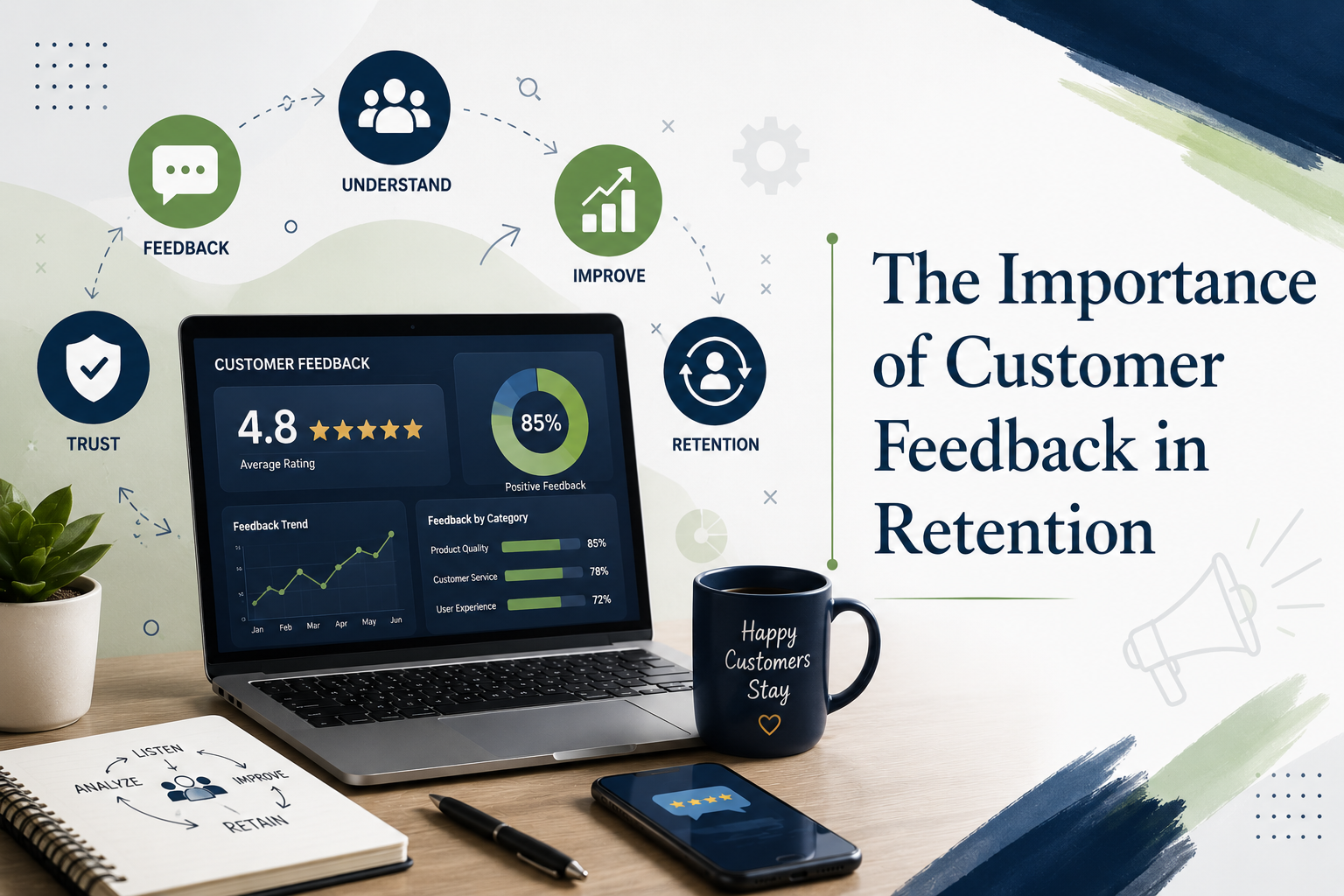
The Importance of Customer Feedback in Retention
In today's competitive business environment, retaining customers has become a top priority for companies looking to achieve sustainable growth. Customer retention can have a significant impact on profitability, making it essential for businesses to understand what keeps customers satisfied and what causes them to leave.
Customer feedback is one of the most effective ways to gain these insights. By actively listening to customers, businesses can identify pain points, improve their products and services, and build stronger relationships.
This blog explores the crucial role customer feedback plays in retention strategies, along with effective methods for collecting, analyzing, and implementing feedback.
Understanding Customer Feedback
What is Customer Feedback?
Customer feedback refers to the thoughts, opinions, and evaluations customers share about their experiences with a product or service.
Feedback can be collected through:
- Direct communication
- Online reviews
- Social media comments
- Surveys and questionnaires
- Customer service interactions
- Focus groups and interviews
Businesses can use this information to measure customer satisfaction, identify areas for improvement, and make better-informed decisions.
Why is Customer Feedback Crucial?
Customer feedback provides valuable insights into customer expectations and experiences. It can help businesses:
- Understand Customer Value: Loyal customers can provide significant long-term value, making feedback-driven retention strategies an important part of sustainable growth.
- Understand Customer Expectations: Online reviews and customer opinions influence how people perceive businesses, making it important to monitor feedback and maintain a positive customer experience.
- Increase Customer Engagement: Proactively asking customers for their opinions encourages participation and demonstrates that their experiences and perspectives are valued.
The Connection Between Customer Feedback and Retention
Enhancing Customer Satisfaction
Customer satisfaction is one of the key factors influencing retention. By actively soliciting feedback, businesses can identify customer pain points and discover opportunities to improve their products, services, and overall customer experience.
Listening to customers also helps businesses address issues before they become reasons for customers to leave.
Developing Loyalty and Trust
Customers are more likely to remain loyal when they feel that their opinions matter.
When businesses demonstrate that customer feedback leads to meaningful improvements, they build trust and strengthen long-term relationships. Customers are more likely to support brands that listen to them and respond to their needs.
Reducing Churn Rates
Churn refers to the rate at which customers stop doing business with a company.
Understanding why customers leave is essential for reducing churn. Feedback can reveal recurring problems, unmet expectations, or gaps in the customer experience, allowing businesses to address these issues and develop strategies to retain customers who may be at risk of leaving.
Types of Customer Feedback
Surveys and Questionnaires
Surveys are one of the most common ways to collect customer feedback. They can be distributed through email, websites, mobile applications, or immediately after a purchase.
Short surveys focused on specific aspects of the customer experience can provide valuable and actionable insights.
Reviews and Ratings
Online reviews are an important source of customer feedback. Positive reviews can strengthen a company's reputation, while negative reviews can highlight areas that need improvement.
Responding to reviews—both positive and negative—also demonstrates that a business values customer opinions.
Social Media Comments
Social media platforms have become powerful channels for gathering customer feedback.
Monitoring comments, messages, mentions, and conversations on platforms such as Facebook, Instagram, LinkedIn, and X can provide real-time insights into customer opinions, expectations, and emerging trends.
Direct Communication
Direct customer interactions, particularly through customer service teams, can provide detailed and valuable feedback.
Training customer service representatives to actively listen and identify feedback during conversations can help businesses uncover issues that may not appear through surveys or online reviews.
Collecting Customer Feedback
Effective Strategies for Gathering Feedback
1. Use Post-Purchase Surveys
Sending a short survey after a purchase allows businesses to collect feedback while the customer experience is still fresh.
Keep surveys concise and focus on important areas such as:
- Product satisfaction
- Delivery experience
- Customer service
- Ease of purchase
- Overall experience
2. Integrate Website Feedback Forms
Adding feedback forms to a website gives customers an easy way to share their opinions.
Make sure the forms are easy to find, simple to complete, and focused on specific questions that can generate actionable insights.
3. Engage on Social Media
Monitoring social media and actively responding to customer comments can create a stronger sense of community.
Encouraging customers to share their experiences can also provide valuable insights into how they perceive the brand.
4. Conduct Focus Groups and Interviews
Focus groups and customer interviews can provide deeper qualitative insights.
Speaking directly with selected customers can reveal detailed perspectives, concerns, motivations, and recommendations that may not emerge from quantitative surveys.
5. Make Use of Technology
CRM systems and feedback management platforms can streamline the process of collecting, organizing, and analyzing customer feedback.
Tools such as Qualtrics and HubSpot can help businesses manage feedback more efficiently and turn customer insights into actionable information.
Analyzing Customer Feedback
Converting Feedback into Useful Insights
Collecting feedback is only the first step. Businesses must analyze the information they receive and turn it into meaningful actions.
1. Identify Patterns and Trends
Regularly review customer feedback to identify recurring themes and common concerns.
Recognizing patterns can help businesses determine which areas require the most attention.
2. Segment Feedback
Segment feedback based on factors such as:
- Customer demographics
- Customer behavior
- Purchase history
- Product usage
- Customer segment
This can help businesses identify specific issues affecting particular customer groups.
3. Prioritize Issues
Not every piece of feedback requires immediate action.
Prioritize issues based on factors such as:
- Impact on customers
- Frequency of the problem
- Business impact
- Ease of implementation
- Strategic importance
This allows businesses to focus resources on changes that can make the greatest difference.
4. Measure and Monitor Progress
Establish key performance indicators (KPIs) to evaluate whether feedback-driven improvements are producing the desired results.
Monitoring customer satisfaction, retention, churn, and other relevant metrics over time can help businesses refine their strategies.
Implementing Changes Based on Feedback
Best Practices for Putting Feedback into Action
1. Establish a Feedback Loop
Create an ongoing feedback loop that allows customer insights to continuously influence business decisions.
Feedback should not be treated as a one-time activity. It should become an integral part of product development, customer service, and business improvement.
2. Communicate Changes
Let customers know when changes have been made based on their feedback.
Communicating these improvements demonstrates that the business listens and values customer input, which can strengthen engagement and trust.
3. Track the Impact
After implementing changes, monitor their effect on customer satisfaction, engagement, retention, and churn.
This helps determine whether the changes are delivering the intended results.
4. Express Gratitude
Thank customers who take the time to provide feedback.
Personalized messages, incentives, or public acknowledgment can encourage customers to continue sharing their opinions.
Case Studies: Successful Feedback Implementation
Real-World Examples
Example 1: A SaaS Company
A software company discovered through regular user surveys that many customers were experiencing difficulties with a particular feature.
The company simplified the interface and introduced additional training resources. These improvements resulted in increased customer satisfaction and improved retention.
Example 2: A Retail Brand
A clothing retailer identified recurring sizing concerns through customer feedback.
By improving its sizing charts and introducing more inclusive sizing options, the retailer was able to improve the customer experience, strengthen loyalty, and reduce product returns.
Technology's Role in Gathering Feedback
Using Tools to Increase Efficiency
Feedback management platforms such as Usersnap and SurveyMonkey can simplify the process of collecting, organizing, and analyzing customer insights.
Technology can reduce manual effort and make it easier for businesses to identify trends across large volumes of customer feedback.
CRM Systems
Integrating customer feedback with CRM systems allows businesses to track customer interactions, preferences, and sentiment over time.
This information can support more personalized communication and help teams better understand individual customer needs.
Challenges in Collecting and Implementing Feedback
Common Obstacles
1. Low Response Rates
Getting customers to provide feedback can be challenging.
Businesses can improve response rates by:
- Keeping surveys short
- Making the process simple
- Asking relevant questions
- Offering appropriate incentives
2. Information Overload
Businesses may receive large volumes of customer comments, making it difficult to identify the most important insights.
Prioritizing key metrics, identifying recurring themes, and focusing on actionable feedback can make analysis more manageable.
3. Resistance to Change
Implementing changes based on customer feedback may require significant adjustments to existing processes.
Businesses should encourage a culture of continuous improvement and empower teams to act on valuable customer insights.
Conclusion
Customer feedback is an essential component of effective retention strategies. By proactively listening to customers and acting on their insights, businesses can improve satisfaction, strengthen loyalty and trust, and reduce customer churn.
The most valuable feedback strategy goes beyond simply collecting opinions. Businesses need to create effective systems for analyzing feedback, implementing meaningful changes, communicating those improvements, and measuring their impact.
By combining customer insights with technology and a culture of continuous improvement, businesses can build stronger customer relationships and create the foundation for sustainable long-term growth.