
The Role of SWOT Analysis in Strategic Planning
Among the many tools used in strategic planning, few are as widely applied—or as frequently misused—as SWOT analysis.
When done well, a SWOT analysis provides the factual foundation on which strategic objectives can be built. When done poorly, it becomes a superficial brainstorming exercise with little strategic value.
This article explains what SWOT analysis is, why it matters, how to conduct it effectively, and how to turn its findings into actionable strategic decisions.
What Is a SWOT Analysis?
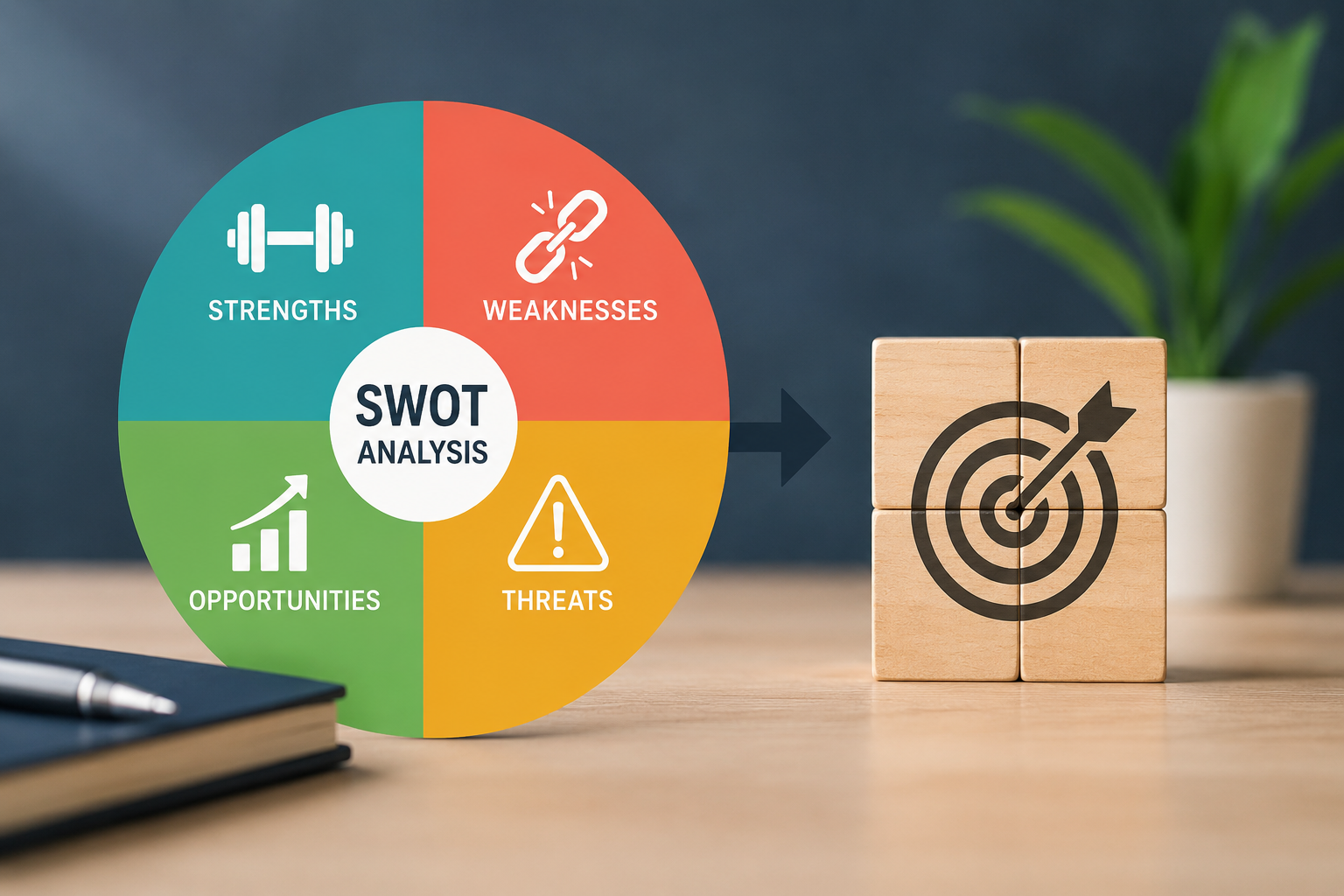
SWOT stands for Strengths, Weaknesses, Opportunities, and Threats.
Strengths and weaknesses are internal factors within an organization's control. These may include talent, technology, brand reputation, operational capabilities, or financial resources.
Opportunities and threats are external factors influenced by the market and broader business environment. These can include emerging customer needs, regulatory changes, economic shifts, technological developments, or new competitors.
Organized into a simple four-part framework, SWOT analysis gives leadership a structured way to evaluate the organization's current position before determining its strategic direction.
| Internal Factors | External Factors |
|---|---|
| Strengths — What does the organization do well? | Opportunities — What external possibilities can the organization pursue? |
| Weaknesses — Where does the organization need to improve? | Threats — What external factors could negatively affect the organization? |
Why SWOT Analysis Matters in Strategic Planning
Strategic planning should be grounded in reality rather than assumptions or optimism alone.
SWOT analysis helps leadership examine the organization's current position from multiple perspectives and identify the factors that may influence future performance.
Identifies Competitive Advantage
A clear understanding of organizational strengths helps leadership determine where to invest, differentiate, and build competitive advantage.
Surfaces Risks Early
Identifying threats before they become immediate problems allows organizations to develop mitigation strategies and prepare for potential disruptions.
Exposes Weaknesses
SWOT analysis encourages leadership teams to acknowledge internal limitations that could prevent the organization from achieving its objectives.
Connects Internal and External Context
The real value of SWOT comes from connecting what the organization can control with what is happening outside it.
This helps ensure that strategic objectives are ambitious while still being realistic and achievable.
How to Conduct an Effective SWOT Analysis
A useful SWOT analysis should go beyond a quick brainstorming session.
Involve Multiple Perspectives
Include people from different departments, functions, and levels of the organization.
Senior leadership may have a strong strategic view, but frontline teams often have valuable insights into customers, operations, processes, and emerging challenges.
Bringing these perspectives together can reduce blind spots.
Support Findings With Data
SWOT entries should be based on evidence wherever possible.
Useful inputs may include:
- Customer feedback.
- Financial results.
- Sales performance.
- Operational data.
- Employee feedback.
- Market research.
- Competitor analysis.
- Industry trends.
For example, instead of simply stating "strong team" as a strength, a more useful entry would identify a specific, measurable achievement that demonstrates the team's capability.
Be Specific
Generic statements provide limited strategic value.
A statement such as "strong brand" is difficult to act upon. A more specific observation might identify high customer recognition in a particular market segment or strong customer retention compared with competitors.
Specific findings make it easier to determine what action should follow.
Prioritize the Findings
Not every strength, weakness, opportunity, or threat has the same strategic importance.
Once the list is complete, prioritize the factors based on their potential impact and relevance to the organization's objectives.
The goal is not to create the longest SWOT matrix. It is to identify the factors that matter most.
Translate Findings Into Action
A SWOT analysis has limited value if it remains a document that sits unused after a planning workshop.
The findings should directly inform strategic objectives, initiatives, resource allocation, and decision-making.
From SWOT to Strategy: The TOWS Extension
A common next step after completing a SWOT analysis is the TOWS matrix.
While SWOT helps identify important internal and external factors, TOWS focuses on combining those factors to generate strategic options.
Strengths + Opportunities
Use existing strengths to take advantage of external opportunities.
Strengths + Threats
Use organizational strengths to reduce or counter external threats.
Weaknesses + Opportunities
Address internal weaknesses that may prevent the organization from taking advantage of opportunities.
Weaknesses + Threats
Minimize weaknesses to reduce exposure to external threats.
This approach turns a static SWOT analysis into a set of actionable strategic directions.
Common SWOT Analysis Mistakes
Although SWOT is relatively simple, several common mistakes can reduce its strategic value.
Treating SWOT as a One-Time Exercise
A SWOT analysis should not exist separately from the broader strategic planning process.
It should contribute directly to strategic priorities and be revisited as circumstances change.
Listing Too Many Factors
A long list does not necessarily mean a better analysis.
Without prioritization, important issues can become buried among less significant observations.
Confusing Internal and External Factors
Strengths and weaknesses are generally internal. Opportunities and threats are generally external.
Keeping this distinction clear is essential for creating a useful analysis.
Relying on Opinions Alone
Unverified assumptions can create a misleading picture of the organization.
Whenever possible, findings should be supported by data, research, and evidence.
Failing to Revisit the Analysis
Markets evolve, competitors change, and customer expectations shift.
A SWOT analysis that was accurate several years ago may no longer reflect the organization's current reality.
Because an objective outside perspective can often surface blind spots that internal teams miss, organizations may also work with external advisors such as [Aaytham Consulting](https://aaythamconsulting.com/) to facilitate the SWOT process and challenge assumptions before they become embedded in the strategic plan.
SWOT Analysis Across Different Industries
The specific factors included in a SWOT analysis can vary significantly depending on the industry and organization.
Manufacturing
A manufacturing company might identify:
- Strength: Supply chain reliability.
- Strength: Production capacity.
- Threat: Rising raw material costs.
Software
A software company might identify:
- Strength: Engineering talent.
- Strength: Strong product roadmap.
- Threat: Competitors with faster release cycles.
Retail
A retail business might identify:
- Strength: Strong store locations.
- Strength: Customer loyalty.
- Threat: Changing foot traffic patterns.
The framework remains the same, but the factors should always reflect the organization's actual market, competitive environment, capabilities, and challenges.
The value of SWOT does not come from filling out a generic checklist. It comes from identifying the factors that genuinely matter to a specific organization.
SWOT Analysis as a Recurring Practice
Organizations get the most value from SWOT analysis when it becomes a recurring part of the strategic planning process rather than a one-time workshop.
Revisiting the analysis annually—or whenever a significant market shift occurs—helps leadership understand what has changed since the previous planning cycle.
A strength that was valuable two years ago may no longer be a differentiator if competitors have caught up.
Similarly, a threat that once seemed distant may become an immediate strategic concern.
Treating SWOT as a living management practice keeps the broader strategic plan connected to current business realities.
Conclusion
SWOT analysis remains one of the most practical tools in strategic planning because it is simple, flexible, and grounded in both internal and external realities.
Used rigorously, it helps organizations identify competitive advantages, uncover weaknesses, anticipate threats, and recognize opportunities.
However, the real value of SWOT does not come from completing the matrix itself.
Its value comes from what happens next.
When SWOT findings are prioritized, connected to strategic objectives, and translated into actionable initiatives, the framework becomes far more than a brainstorming exercise. It becomes a practical foundation for making better strategic decisions and building a more focused path toward long-term growth.